What Should Hockey Players
Train in the Off-Season?
The off-season is the best opportunity to build physical qualities that are difficult to develop when games, practices and travel dominate the week. The goal is not to make the gym look like hockey. The goal is to build a better-prepared athlete for hockey.
RVX Performance · Edmonton, Alberta
Do not copy the game.
Prepare for the game.
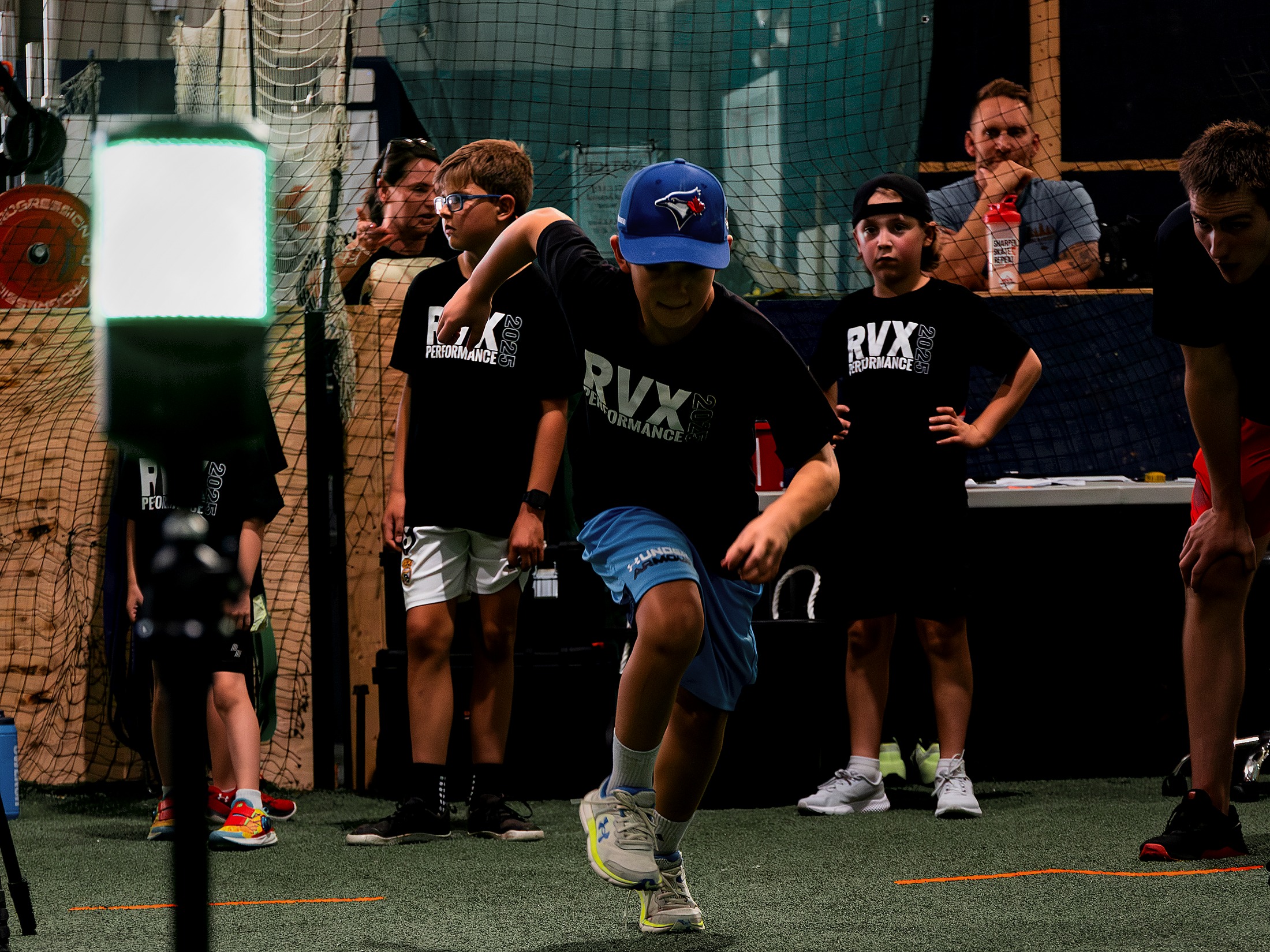
On-ice coaches develop skating, puck skills, tactics and decision-making. Off-ice performance training should develop the physical qualities that allow those skills to be expressed more effectively.
That means the off-season should create enough time and training consistency to improve speed, strength, power, movement quality and physical capacity without trying to turn every drill into a hockey simulation.
Build acceleration
and speed.
Hockey is full of short, explosive efforts. Off-ice sprint training gives athletes a clear environment to improve how they accelerate, apply force and coordinate movement at higher speed.
What to train
Acceleration mechanics, short sprints, longer sprint exposure when appropriate, deceleration, lateral movement and change of direction.
Why it matters
Speed qualities are difficult to improve when an athlete is constantly fatigued. The off-season creates room for high-quality sprint work before conditioning volume and competitive demands increase.
Build strength
that supports performance.
Strength is a foundation for force production, training tolerance and long-term athletic development. The program should match the athlete's age, training history and current ability—not a generic hockey workout.
Lower Body
Develop force through squatting, hinging, split-stance and single-leg patterns with loads and variations appropriate to the athlete.
Upper Body
Build pressing, pulling and trunk strength that supports robust athletic movement and the ability to tolerate training volume.
Progression
Good strength training is progressive. Athletes should earn load and complexity through technique, consistency and adaptation.
Turn strength
into power.
Hockey performance depends on producing force quickly. Power development connects strength to explosive athletic actions.
Jump + Land
Jumping and landing progressions help athletes produce and absorb force while improving coordination and intent.
Explosive Strength
Medicine-ball throws, loaded jumps and other explosive methods can be used when they fit the athlete's training age and current phase.
Test to answer
useful questions.
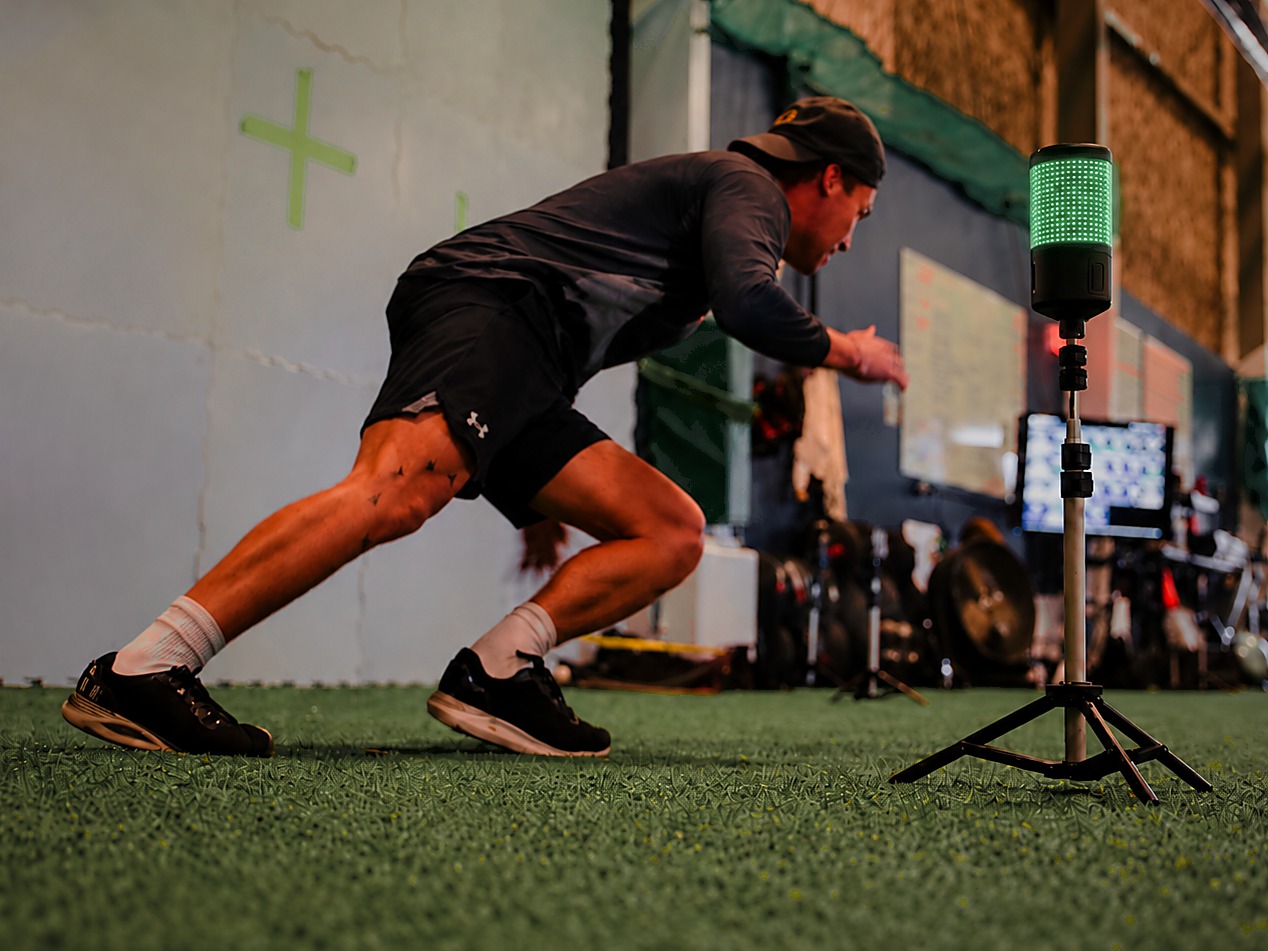
Testing should help coaches and athletes make better decisions. It is not useful simply because a number can be collected.
Speed, force, power and capacity measures can establish a baseline, identify priorities and show whether the athlete is actually adapting. The most important question is whether the result changes what we do next.
Condition for hockey
without chasing fatigue.
Conditioning should improve the athlete's ability to repeat high-intensity work and recover between efforts. More fatigue is not automatically better training.
Build the Engine
Early off-season work can include lower-intensity aerobic development and general capacity so the athlete can tolerate later training more effectively.
Move Toward the Game
As camp approaches, conditioning can become more specific to repeated high-intensity efforts while overall training becomes more focused and competition-ready.
The emphasis should
change over time.
A good off-season is not one workout repeated for three months. Training should evolve as the athlete adapts and the next competitive season gets closer.
Reset + Assess
Recover from the season, establish a baseline and identify the qualities that need attention.
Build
Develop strength, movement quality, speed foundations and general work capacity.
Develop
Increase speed, power and training intensity while continuing progressive strength work.
Prepare
Shift toward faster, more specific high-intensity work and reduce unnecessary fatigue as camp approaches.
Re-Test
Use selected tests to evaluate adaptation and guide the transition into the next phase.
What an off-season
should avoid.
Everything Is “Hockey Specific”
Trying to mimic skating or stickhandling in the weight room often reduces the quality of the physical training. Build physical qualities off the ice and develop hockey skills on the ice.
Conditioning Too Early
If every session becomes a conditioning circuit, athletes lose opportunities to train speed, power and strength at high quality.
No Progression
Random workouts may feel difficult, but difficulty is not the same as development. The training plan should progress based on the athlete's response and the time remaining before camp.
Where RVX
fits.
RVX provides structured off-season and off-ice hockey performance training in Edmonton for youth through professional athletes. We focus on the physical development side of the game and work alongside—not instead of—on-ice skill development.
Elite Summer
Comprehensive off-season speed, strength, power, capacity, testing and athlete education.
View Elite SummerOpen Performance
Flexible small-group performance training for athletes who need weekly access around sport and travel.
View Open PerformancePerformance Testing
Objective speed, force, power and capacity testing used to establish baselines and guide training priorities.
View Testing